
Biophysical Profile Score (BPS or BPP)
The biophysical profile is a test used to evaluate the well-being of the fetus. The biophysical profile uses ultrasound and cardiotocography (CTG), also known as electronic fetal heart rate monitoring, to examine the fetus. There are five components measured during the biophysical examination. A score of 2 points is given for each component that meets criteria as listed in the table below. The test is continued until all criteria are met or 30 minutes have elapsed. The points are then added for a possible maximum score of 10.
| Component | Normal (2 points) | Abnormal (0 points) |
|---|---|---|
| Fetal breathing movements | One or more episodes of fetal breathing lasting at least 30 seconds within 30 minutes. | No episodes of fetal breathing movements lasting at least 30 seconds during a 30 minute period of observation. |
| Gross body movement | Three or more discrete body or limb movements within 30 minutes. | Less than three body or limb movements in 30 minutes. |
| Fetal tone | One or more episodes of active extension and flexion of a fetal extremity OR opening and closing of the hand within 30 minutes. | Slow extension with no return or slow return to flexion of a fetal extremity OR no fetal movement. |
| Amniotic fluid volume* | A single deepest vertical pocket of amniotic fluid measures equal to or greater than 2 cm by 1 cm wide without cord or fetal parts. | A single deepest vertical pocket of amniotic fluid measures less than 2 cm. |
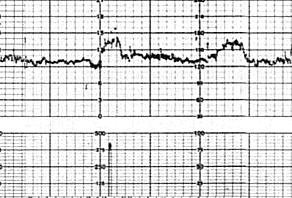
| Non-stress test (NST)** |
Reactive
|
Nonreactive |
* Amniotic fluid volume is measured as the vertical measurement, in
centimeters, of the single deepest pocket of amniotic fluid with a transverse
measurement of 1 cm or more wide, without fetal small parts or umbilical
cord [2].
** Reactive NST: Two or more fetal heart rate accelerations that peak
(but do not necessarily remain) at least 15 beats per minute above the
baseline and last at least 15 seconds from baseline to baseline during
20 minutes of observation.
** Nonreactive NST: Fewer than two accelerations of fetal heart rate as
described above after 40 minutes of observation [1].
Biophysical profile test score results
A total score of 10 out of 10 or 8 out of 10 with normal fluid is considered normal. A score of 6 is considered equivocal, and a score of 4 or less is abnormal [1,3,6]. A score of less than 8 indicates the fetus may not be receiving enough oxygen. However, decreased biophysical activities may also be seen for a brief time in the preterm fetus after treatment with either betamethasone or dexamethasone given to enhance fetal lung maturity [7].
| Test score | Management — ACOG [1] | Management — SOGC [6] |
|---|---|---|
|
10 out of 10 8 out of 10 (normal fluid) 8 out of 10 (NST not done) |
Deliver for obstetric or maternal factors. | |
|
8 out of 10 (abnormal fluid) |
Uncomplicated, isolated persistent oligohydramnios: deliver at 36 to 37 weeks. | If there is normal urinary tract function and intact membranes, deliver at term. If < 34 0/7 weeks, intensive surveillance to maximize maturity. |
|
6 out of 10 (normal fluid) |
At or beyond 37 0/7 weeks of gestation: further evaluation and consideration of delivery. Less than 37 0/7 weeks: repeat BPP in 24 hours. | Repeat test within 24 hours. |
|
6 out of 10 (abnormal fluid) |
Deliver if at term. If < 34 0/7 weeks, intensive surveillance to maximize maturity. | |
| 4 out of 10 | Delivery is usually warranted. For pregnancies at less than 32 0/7 weeks of gestation, management should be individualized, and extended monitoring may be appropriate. | Delivery is usually indicated. For pregnancies at less than 32 0/7 weeks of gestation, management should be individualized, and extended monitoring may be appropriate. |
| 2 out of 10 | Deliver. | Deliver. |
| 0 out of 10 | Deliver. | Deliver. |
The modified biophysical profile (MBPP)
Some testing centers use a modified biophysical profile [4,5]. The modified BPP consists of the nonstress test (NST) and an amniotic fluid volume assessment. The modified BPP is considered normal if the NST is reactive and the deepest vertical pocket of amniotic fluid is greater than 2 centimeters. The modified BPP is considered abnormal if either the NST is nonreactive or the deepest vertical pocket of amniotic fluid is 2 cm or less [1].
When is the MBPP or BPP usually performed?
The modified BPP may be performed for decreased fetal movement. If the NST is nonreactive or the amniotic fluid volume is low, a full BPP is usually done.
ACOG recommends the MBPP or BPP may also be used for antepartum fetal surveillance in pregnancies at increased risk for adverse perinatal outcomes, including, but not limited to, pregnancies complicated by hypertension, preeclampsia, pregestational diabetes, poorly controlled or medically treated gestational diabetes, poorly controlled hyperthyroidism, chronic renal disease, systemic lupus erythematosus, antiphospholipid syndrome, hemoglobinopathy (sickle cell disease), maternal cyanotic heart disease, moderate or severe asthma during pregnancy, isoimmunization, oligohydramnios, unexplained or recurrent risk for stillbirth, fetal growth restriction, and late-term pregnancy at or beyond 41 0/7 weeks [1,9,10].
The Society of Obstetricians and Gynaecologists of Canada (SOGC) suggests antenatal fetal surveillance may also be beneficial in pregnancies complicated by preterm premature rupture of membranes, chronic (stable) abruption, vaginal bleeding, abnormal maternal serum screening in the absence of confirmed fetal anomaly, motor vehicle accident during pregnancy, morbid obesity, advanced maternal age, assisted reproductive technologies, multiple pregnancy, polyhydramnios, and preterm labor [6].
In addition to many of the above indications, an executive summary by a Eunice Kennedy Shriver National Institute of Child Health and Human Development workshop on antenatal testing suggested antepartum testing for cholestasis of pregnancy was appropriate. However, the workshop found insufficient data to recommend antenatal testing for other conditions such as obesity, advanced maternal age, abnormal maternal serum markers, thrombophilias, triplets and higher-order multiples [11].
The American College of Obstetricians and Gynecologists has observed that, despite a lack of high-quality evidence that antepartum surveillance decreases the risk of fetal death, “antepartum fetal surveillance is widely integrated into clinical practice in the developed world” [1,8]. ACOG advises that initiating antepartum fetal testing no earlier than 32 0/7 weeks of gestation is appropriate for most at-risk patients. However, in pregnancies with multiple or particularly worrisome high-risk conditions (e.g., chronic hypertension with suspected fetal growth restriction), testing might begin at a gestational age when delivery would be considered for perinatal benefit. If delivery is not planned (for example, given early gestational age), then antenatal surveillance should not be performed because the results will not inform management [1].
Standard diagnostic obstetric ultrasound examination techniques, including assessment of fluid pockets and fetal movements, are described in the AIUM–ACR–ACOG–SMFM–SRU practice parameter for the performance of standard diagnostic obstetric ultrasound examinations [12].
perinatology.com does not provide medical advice, diagnosis or treatment. Please read the disclaimer.